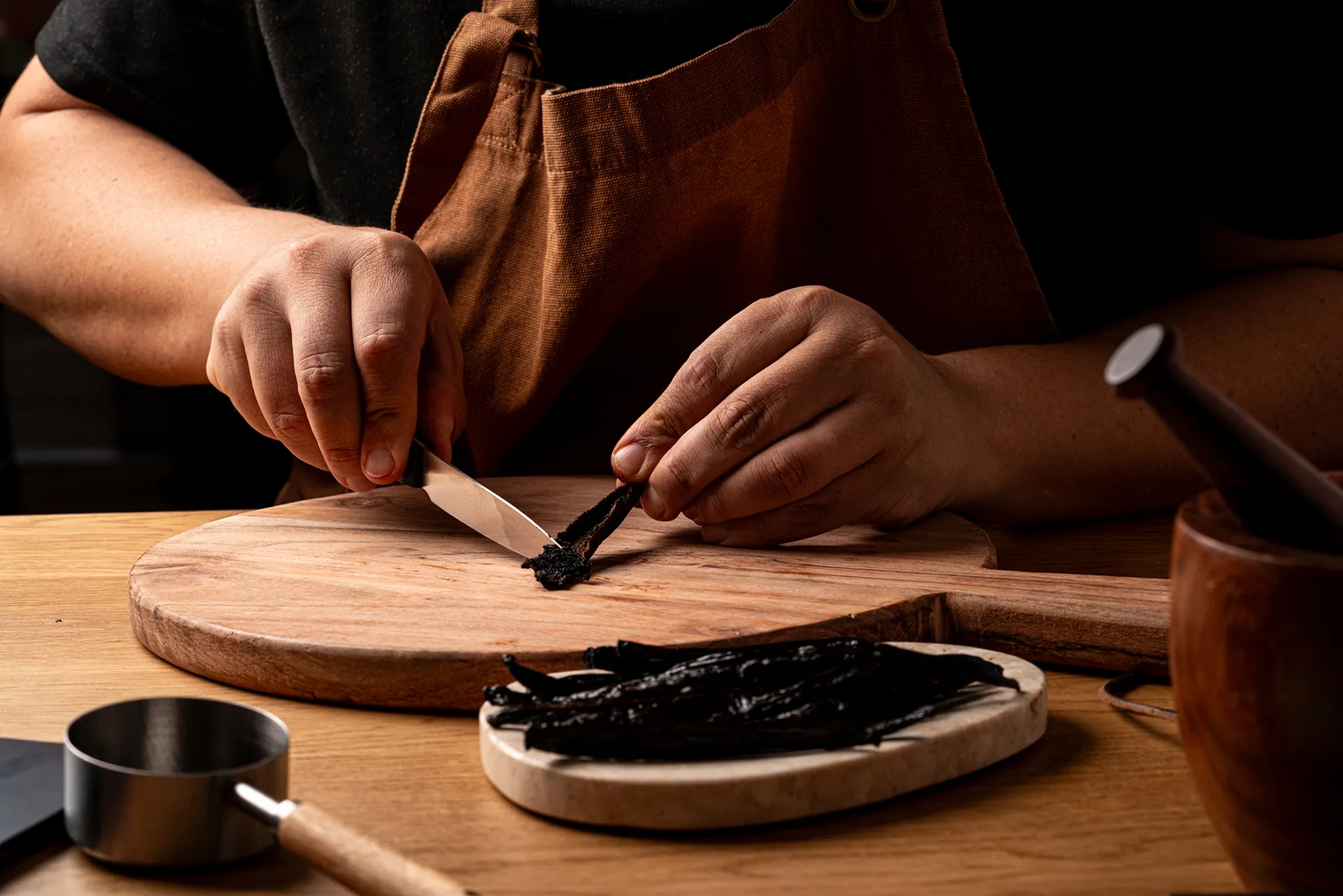
The Complete Guide to Storing Vanilla Pods: Keep Your Vanilla Pods Fresh and Flavourful

Vanilla pods are expensive, often costing between £3 and £9 each, and they deserve proper storage to protect your investment and preserve their qualities and flavour.

Keep Vanilla Fresh and Flavourful

There’s something almost magical about vanilla pods. Those slender, dark brown beans hold an intoxicating aroma and complex flavour that no extract can truly replicate. But here’s the thing: vanilla pods are expensive, often costing between £3 and £9 each, and they deserve proper storage to protect your investment and preserve their qualities and flavour.
 
When sourcing vanilla pods, look for plump, flexible, and glossy pods. These characteristics indicate freshness and quality. It’s worth purchasing from reputable suppliers or speciality stores known for their high standards.
 
After years of working with vanilla, we’ve learned that how you store the pods makes all the difference between beans that stay plump and fragrant for a long time and those that dry out, lose their aroma, or develop mould. Let me share what actually works.

Why Proper Storage Matters

Vanilla pods contain natural oils and moisture that give them their distinctive aroma. When vanilla pods are exposed to air, light, or extreme temperatures, the compounds within them degrade. The beans can dry out, become brittle, and lose their qualities. Proper storage maintains the delicate balance of moisture and prevents degradation.
When sourcing vanilla pods, look for plump, flexible, and glossy pods. These characteristics indicate freshness and quality.

The 3 Golden Rules of Vanilla Pod Storage

1. Keep them airtight

Keep them airtight. This is non-negotiable. Vanilla pods need protection from air exposure, as this can cause them to dry out and lose volatile aromatic compounds. An airtight container preserves moisture, keeping those precious oils locked inside the beans.

2. Store in a cool, dark place

Think of vanilla pods like fine wine; they hate light and heat. UV rays degrade the vanillin compounds, while heat accelerates moisture loss. Your pantry, a kitchen cupboard away from the stove, or even a drawer, works perfectly. Aim for temperatures between 60-70°F (15-25°C).

3. Avoid the refrigerator

This surprises many people, but refrigeration is actually problematic for vanilla pods. The cold, dry environment encourages moisture loss, and the beans can pick up odours from other foods. The fridge also promotes condensation when you remove the pods, which increases the risk of mould.

The Best Storage Methods

Glass Tubes or Jars (My Personal Favourite)

We store our vanilla pods in glass containers with tight-fitting corks or screw-top lids. Glass doesn’t absorb odours, allows you to see your beans at a glance, and creates an excellent seal. Test tubes from laboratory supply stores work brilliantly, as do repurposed olive or spice jars.
 
Pro tip: If using a jar, choose one just slightly taller than your beans so they’re not bent or cramped. Vanilla pods should lie flat or stand upright, not be folded.

Vacuum-Sealed Bags

For long-term storage or if you’ve bought vanilla in bulk, vacuum sealing is ideal. It removes all air and locks in moisture perfectly. We vacuum-seal pods in portions, then store the bags in a dark cupboard. Pods stored this way can last for years.
 
Vacuum sealing uses a machine to remove air from a specially designed bag, then seals it tightly. Consider investing in a basic vacuum sealer to streamline this process. These devices are typically affordable and can be used for a range of food-preservation tasks beyond vanilla pods.

Wrapped in Parchment Inside a Container

This is the traditional method, and it works beautifully. Wrap your vanilla pods in parchment paper (not plastic wrap, which can trap too much moisture), then place them in an airtight container. The parchment allows the beans to breathe slightly while the outer container provides protection.
 

What About Vanilla in Alcohol?

Storing vanilla pods submerged in vodka, rum, or bourbon serves a dual purpose: preserving the beans and creating vanilla extract. This method works wonderfully if you use vanilla frequently. The alcohol prevents mould, extracts flavour over time, and keeps the pods supple.
 
However, pods stored in alcohol will gradually lose some of their intensity to the liquid. If you want to keep beans at their peak for specific applications such as splitting and scraping, use dry storage.

Real-World Tips from the Kitchen

Check your beans periodically. Once every few months, open your container and inspect the pods. They should feel supple and slightly oily to the touch. If they’re developing white crystals on the surface, don’t panic, that’s vanillin crystallising, which is actually a sign of high-quality vanilla. Simply wipe it off or brush it into your recipe.
 
Distinguishing these crystals from mould can be vital: vanillin crystals are typically small, evenly distributed, and resemble sugar grains, while mould often appears as fuzzy patches with discolouration. This distinction ensures you enjoy every bit of your vanilla without unnecessary waste.
 
The squeeze test tells you everything. A properly stored vanilla pod should be pliable. When you gently squeeze it between your fingers, it should feel soft and flexible, never brittle or crunchy. If it bends easily, you’re doing it right.
 
Rotate your stock. If you have multiple pods, use the oldest ones first. Mark your containers with purchase dates so you remember which beans have been stored longest.
 
Don’t wash vanilla pods before storing. Any excess moisture increases the risk of mould. If your beans arrive slightly damp, let them air dry for a few hours before sealing them away.
 
Consider your climate. In very humid environments, be extra vigilant about mould. In these conditions, vacuum-sealing becomes even more valuable.

How Long Do Vanilla Pods Last?

With proper storage, vanilla pods remain excellent for 2 to 3 years and remain usable well beyond that. I’ve worked with four-year-old beans that were stored correctly, and they were still beautifully aromatic. The key is that they might become slightly drier over time, but as long as they’re not completely desiccated, they’ll still impart wonderful flavour.

When Things Go Wrong

If the pods dry out, don’t discard them. You can rehydrate dried vanilla pods by placing them in a small amount of warm water or milk for 10-15 minutes before using. They won’t be quite as potent as fresh pods, but they’re absolutely salvageable.
 
Additionally, consider using spent or dried pods to infuse sugar or make homemade vanilla extract. Add the pods to a jar of sugar to make vanilla-flavoured sugar, or submerge them in a bottle of vodka to make your own extract over time. These methods help you get the most value from your purchase.
 
If you spot mould: Unfortunately, mouldy vanilla pods should be discarded. Mould can appear as fuzzy spots in white, green, or black, indicating that moisture was trapped in the beans. This is why airflow balance is crucial: enough to prevent mould, but not so much that the beans dry out.


Aromatic. Expressive. Unforgettable.

The flavour and aromatic profile of our vanilla is influenced by the species, production location, curing process, and storage conditions. This natural setting infuses Vanilla Maya with the terroir, just as fine wine or speciality coffee reflects the soil and soul of its region.
More from our blog

Imagine the warm, sweet scent of vanilla filling the room when you first open a properly stored pod. It should feel supple to the touch, with its natural oils subtly glistening on the surface. Proper storage…

Jonathan Calix

Join The Waitlist

We will inform you when the product arrives in stock. Please leave your valid email address below.


This field is for validation purposes and should be left unchanged.